 English
 Italiano
 Español
 Francais


Marco Scaglione
My professional biography and my story are linked together they kept strong by a strap which is called passion. I'm lucky: I like my job, I enjoy it and it fills me with satisfaction.
It was born a new collaboration between Marco Scaglione and Aksum. Click on the logo and visit their site.
Tart with custard, fresh fruit, and flambéed meringue
Full list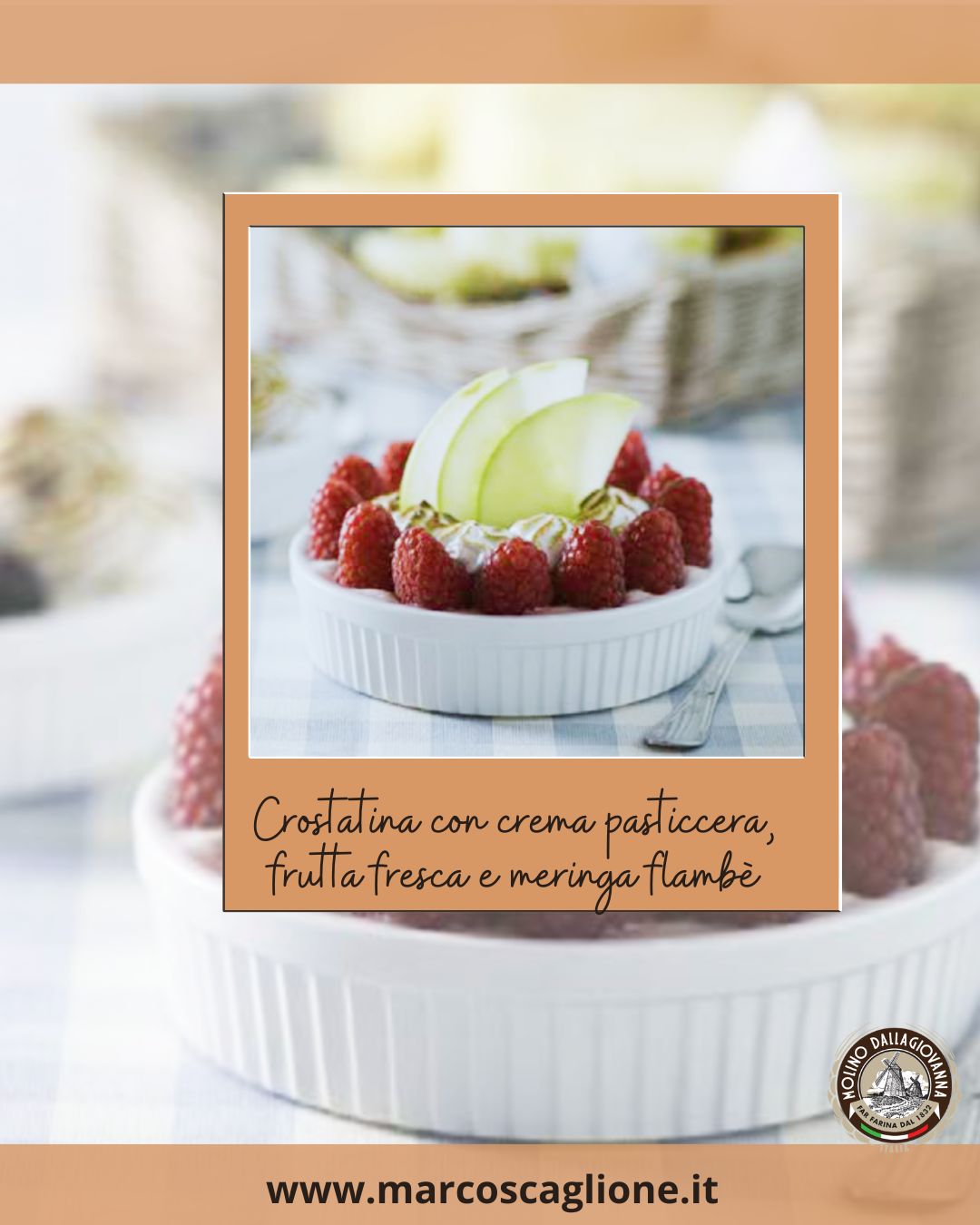
 Condividi su:



Time: 60 minuti più riposo
Difficulty: media
A dessert that may seem complex, but is actually simple, delicious, and impressive thanks to the golden meringue.
Characteristics: Meringue is a fundamental pastry ingredient.
Small and crumbly to add to cakes or ice cream sundaes, soft and creamy "Italian-style" to enhance lemon tarts, large and soft on the inside for a truly sweet indulgence.
Historical Notes: The origins of this dessert likely date back to 18th-century Switzerland, when the Italian pastry chef Gasparini prepared it to win the heart of Princess Marie, betrothed to King Louis XV. However, it appears to have origins in England: the first mention of a similar product, a dessert made with beaten egg whites and sugar, is handwritten by author Elinor Fettiplace and dated 1604.
Note: Depending on the consistency and preparation method, three types of meringue can be distinguished: French meringue, the classic one made by beating egg whites and sugar until they become glossy and firm and then baked; Italian meringue, made with a hot sugar syrup added to the egg whites, softer and creamier; and finally Swiss meringue, more similar in consistency to the Italian meringue but prepared in a bain-marie.
Ingredients for 4
400 g Molino dalla Giovanna cake and cookie mix
180 g butter
120 g sugar
2 whole eggs
1 egg yolk
the grated zest of 1 unwaxed orange
a pinch of salt
fine rice flour for dusting (optional)
For the cream
250 g fresh milk
250 g fresh cream
4 egg yolks
130 g sugar
30 g cornstarch
30 g rice starch
For the meringue
200 g egg whites
400 g sugar
For decoration
Mixed fresh fruit
Method
In a bowl, mix the sugar and cold butter until crumbled, then add the flour and mix for a few more minutes.
Add the eggs, orange zest, and salt, then mix well, incorporating gradually until smooth. Let rest in the refrigerator for at least 1 hour, wrapped in plastic wrap (the ideal resting time for shortcrust pastry is 24 hours).
Meanwhile, prepare the cream: Pour the milk and cream into a saucepan and heat to about 75°C (over low heat, about 3-4 minutes). Using an electric whisk, beat the egg yolks and sugar in a bowl; add the cornstarch and continue beating until frothy. Gradually pour in the milk, stirring constantly with a hand whisk, and combine thoroughly. Transfer the mixture back to the saucepan, place it on the stove and heat it to about 80°C (the cream will not stick at this temperature; this takes about 4 minutes on low heat). Then turn off the heat and transfer the cream to a shallow, wide baking pan. Cover with plastic wrap and let it cool, then refrigerate.
Take the pastry and roll it out to a thickness of 3-4 mm. Place it into greased and floured tart molds. Pour in the rice and cream mixture, and bake in a preheated oven at 180°C for 20-25 minutes.
Remove the tarts from the oven and let them rest for about 30 minutes.
For the meringue: Heat the egg whites and sugar in a bain-marie, stirring with a whisk, until the temperature reaches 60°C. Transfer the mixture to the bowl of a stand mixer and beat with a whisk until stiff and glossy. Transfer the meringue to a piping bag with a star tip.
Starting from the center of the tart, pipe the meringue in small tufts over the surface until it's completely covered, creating small decorative swirls. Flame the meringue with a blowtorch and serve the tart garnished with fresh fruit.